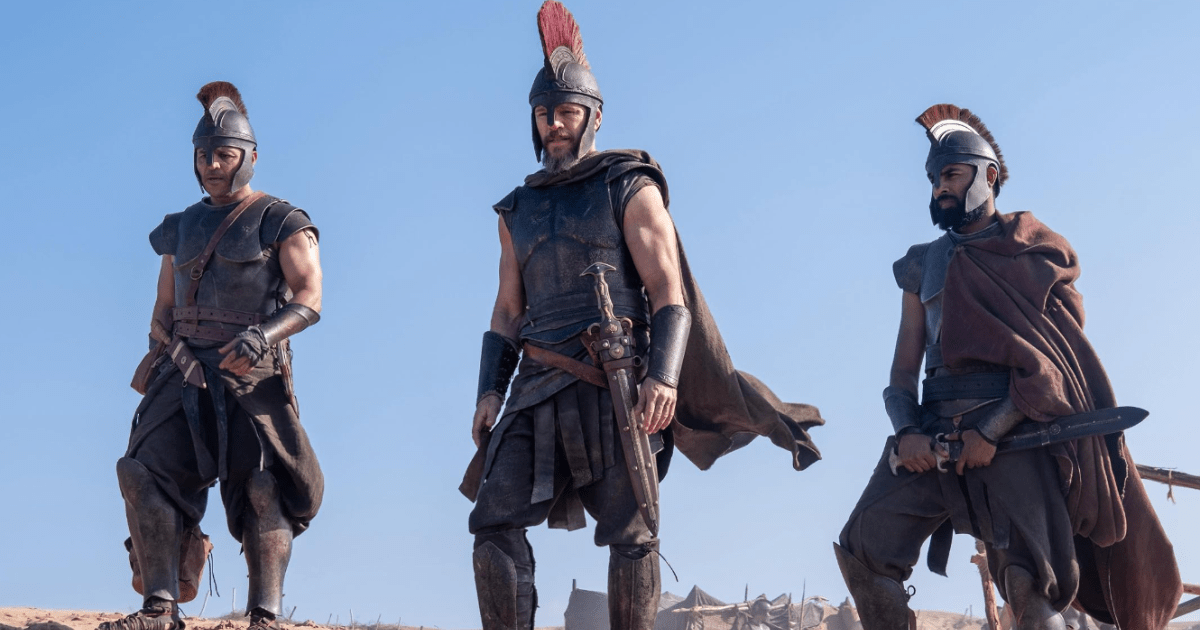
The portrayal of the Trojan Horse in Christopher Nolan’s adaptation of The Odyssey has drawn sharp criticism from acclaimed translator Emily Wilson. In a recent essay for The Atlantic, she argued that Nolan’s version of the iconic wooden prop fails to capture the emotional and moral depth at the heart of Homer’s epic poem.
Wilson critiqued Nolan’s rendering of the Trojan Horse as feeling “light as air” on a narrative level. The translator wrote,
“The Odyssey contains far more pontificating about values and civilizational decline but much less coherence and less heart. It gestures at a critique of xenophobia and violence, but it focuses primarily on the perspective of the guilty, traumatized warrior rather than that of his victims.”
Her other criticisms claim that the movie has devoted its attention to mechanics and massacres as spectacle, which undermines the moralizing claims of “caring about man’s inhumanity to man.” She wrote, “Verbally, we are told that people matter; visually, we are shown that they do not.”
Why Emily Wilson believes The Odyssey loses its human focus
Emily Wilson, a professor of classical studies at the University of Pennsylvania, has published verse translations of Homer’s The Odyssey and The Illiad. Having worked closely on interpreting what the Greek author wanted to express, she argued that Nolan’s adaptation loses its human focus and leans more towards eye-catching scenes.
For instance, she spoke about Odysseus crying after hearing the “story of his greatest triumph,” adding that the readers are not told whether he is weeping over his guilt or his torment of being away from Ithaca.
However, the director portrayed this scene by abandoning this perspective. Wilson stated that the movie is “not interested in the social or psychological questions of how people deceive and are deceived.” Instead, it focuses more on the logistics of rolling the horse uphill and the claustrophobic, waterlogged interior.”
She added that when the ambush of the Trojan Horse begins, the movie focuses more on toppling and enflamed buildings rather than the human actors.
The professor also criticized Nolan’s discord between the dialogues and visual presentation. “The script tells us loudly that people matter, but the camera shows us that what matters is the mechanical challenge of moving objects through space,” she wrote.
This article was originally reported by Christie D’silva on ComingSoon.
View original article here Source