
Years ago, in BOF’s early days, I wrote an op-ed called “Batman Should Be Like Bond.” At the time, I believed the Batman film franchise should follow the classic Bond model: recast the lead when necessary, keep the continuity moving, and never truly start over. From 1989 through 1997, that’s essentially what happened. Michael Keaton gave way to Val Kilmer, who gave way to George Clooney, while the franchise itself simply kept moving forward.
Then came Christopher Nolan and THE DARK KNIGHT TRILOGY.
Nolan showed us a better path. Rather than endlessly continuing a franchise, he delivered a self-contained, filmmaker-driven saga with a clear beginning, middle, and end. Tell the story. Complete the vision. Then pass the torch to the next creative team.
Ironically, around the same time, James Bond became a little more like Batman when CASINO ROYALE rebooted the franchise with an origin story heavily influenced by Nolan’s BATMAN BEGINS.
But now, I think it’s time for Batman to be like Bond again.
The announcement of a new James Bond is always an event. It dominates entertainment headlines, sparks endless debate, and gets fans excited about the future of one of cinema’s most iconic characters. Some people love the choice. Others hate it. But everyone understands what the announcement means: This guy is Bond. James Bond.
Watching the excitement surrounding the latest Bond casting got me thinking about something I’ve believed for years when it comes to Batman: There should only be one live-action Batman at a time.
Now, before anyone accuses me of wanting less Batman, let’s get something straight. I’m talking specifically about live action. Animation is a completely different animal. Batman has thrived in animation for decades, and one of that medium’s greatest strengths is its ability to support multiple interpretations simultaneously. Nobody is confused because there are different animated Batmans. That’s part of the fun.
Live action is different.
Batman isn’t just another comic book character. He’s one of the most recognizable fictional characters in the world. More importantly, he’s always been at his strongest on film when audiences clearly understood who Batman was at that particular moment in time. Michael Keaton had his era. Val Kilmer and George Clooney had theirs. Christian Bale defined Batman for a generation. Ben Affleck followed (although he never played Batman in a solo film). Right now, it’s Robert Pattinson’s gig.
One Batman. One era. One face of the franchise.
James Bond has operated under essentially the same philosophy for more than six decades. Actors come and go, but the role remains singular. That’s one reason Bond castings become international news. There’s only one Bond, and the exclusivity gives the role weight.
And yes, I know about 1983.
Whenever this discussion comes up, Bond fans rightly point out that audiences got both OCTOPUSSY and NEVER SAY NEVER AGAIN in the same year. Roger Moore starred in the official Eon Productions film while Sean Connery returned as 007 in a separate production distributed, ironically enough, by Warner Bros., the owner of the Batman IP.
But NEVER SAY NEVER AGAIN wasn’t part of the official Bond series that began with Dr. NO in 1962. It existed because of a unique rights situation that still confuses me. Nobody looked at that moment and concluded that the future of James Bond should feature multiple concurrent 007s running around on the big screen at the same time. If anything, history reached the opposite conclusion.
More than forty years later, the Bond franchise is still built around one simple idea: One Bond at a time.
The reason is obvious. When everybody can be Bond, nobody feels particularly special. When there’s only one Bond, the entire world pays attention.
Batman deserves that same respect.
In fact, we’ve already seen what happens when Warner Bros. starts muddying the waters. In 2022, THE BATMAN launched the studio’s latest cinematic reboot of the character. Robert Pattinson was introduced as the new Batman, and both critics and audiences responded enthusiastically. Warner Bros. had its Batman.
Then came THE FLASH.
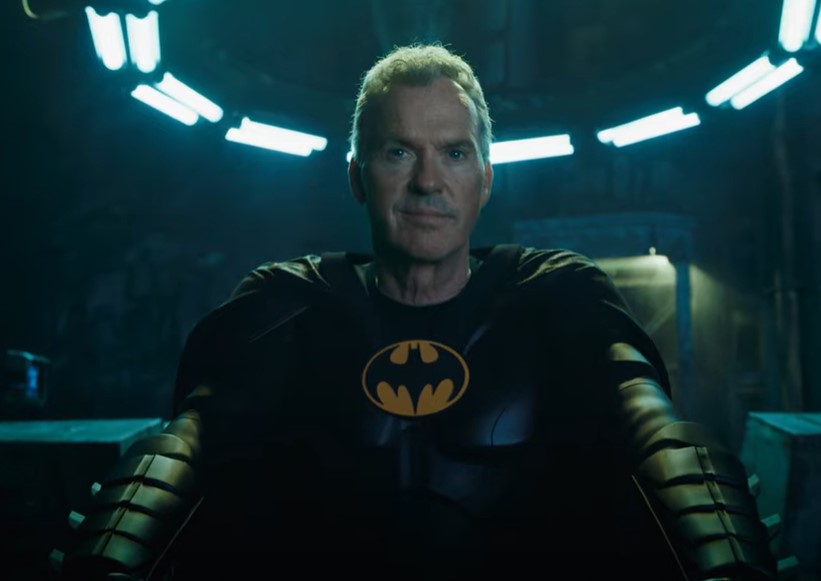
Just one year later, audiences got Ben Affleck’s Batman, Michael Keaton’s Batman, and ultimately a George Clooney Bruce Wayne cameo in the same film. Think about that for a moment. Warner Bros. established a new Batman and then immediately followed it with a movie featuring three different live-action Batmans from previous eras.
How’d that work out?
I’ve said for years that one of Batman’s greatest strengths is his ability to transcend generations. But there’s a difference between honoring past interpretations and turning Batman into a multiversal buffet where everyone simply picks their favorite version.
More Batman is NOT better, folks. That’s nothing more than fan-talk. Like it or not, Batman movies aren’t really made for us fans; they are made for the general audience. And at some point, the target audience needs clarity. At some point, they need to know who Batman is.
Which brings me to the DCU.
One of the most common arguments I hear is that the DCU needs Batman. Maybe it does. Eventually. But right now, I’m not convinced.
And to be clear, this isn’t an argument against the DCU. It’s an argument about timing.
Skydance/Warner Bros. and DC Studios aren’t operating in a world without Batman. THE BATMAN was a critical and commercial success. THE PENGUIN proved audiences remain deeply invested in Matt Reeves’ Gotham. THE BATMAN PART II is one of the most anticipated films on the horizon.
Batman isn’t missing. Batman is already here.

So why the rush?
If the DCU’s mission is to build a shared universe, then build the shared universe. Establish Superman (already released one film and the sequel hits theaters next year). Build Wonder Woman. Introduce Green Lantern (which happened in HBO’s LANTERNS). Take advantage of one of the deepest character libraries in comics.
And if those characters can’t stand on their own without Batman showing up as quickly as possible, then I think it’s fair to ask this question again: What’s the point of the shared universe in the first place?
I’ve said this before and I’ll say it again. If Batman is absolutely essential to the DCU’s survival, then Batman isn’t serving the universe. The universe is depending on Batman to justify its own existence.
Again, Warner Bros. already has a Batman. His name is Robert Pattinson. Audiences have embraced him and his story isn’t finished. Is THE BATMAN EPIC CRIME SAGA an inconvenient success for James Gunn and DC Studios? Maybe. But I’ll reiterate: Skydance/Warner Bros./DC Studios is NOT without bigtime, live-action Batman content.
Will there be another live-action Batman someday? Of course there will! But that day doesn’t have to be tomorrow.
James Bond has spent more than sixty years proving there’s real value in allowing one actor to define each era. Every new Bond casting becomes a major event because audiences know they’re looking at the Bond, not one of several Bonds, not a variant, and not a multiversal counterpart from Bond Earth 220 or 221.
Batman is one of the very few fictional characters on Earth who can command that same level of anticipation.
So let him.
One Batman at a time. One era at a time. One live-action Dark Knight at a time.
And when it’s finally time to pass the cowl, make it feel like an event. That’s how Bond has done it for decades. It’s why people still care so much whenever a new 007 is announced.
Batman is every bit as worthy. – Bill “Jett” Ramey
View original article here Source