Studio Ghibli is one of the most famous and beloved animation studios in the world, and the studio has released many legendary and critically-praised movies, including Howl’s Moving Castle, Spirited Away, and Kiki’s Delivery Service. While the studio has brought many original stories to the screen, many of the firm’s most beloved films started life as books.
Over the years, the studio has taken many novels, biographies, and manga series and transformed them into jaw-dropping movies. But while some of the resulting films stick very close to their literary inspirations, others deviate from the original work dramatically. But which of the studio’s films started life as literature?
Studio Ghibli’s Spirited Away Returns to U.S. Theaters for Start of Ghibli Fest 2024
Ghibli Fest 2024 kicks off with Hayao Miyazaki’s award-winning Spirited Away, with theatrical screenings in America set to begin starting this month.
Grave of the Fireflies Is Based On An Autobiography
Directed by Isao Takahata, 1988’s Grave of the Fireflies is one of the most harrowing movies ever made. The story follows Seita and Setsuko, two young children who must struggle to survive in the devastation of late-war Japan. But as time goes on, the children are exposed to an increasing amount of trauma and tragedy.
Grave of the Fireflies is based on Akiyuki Nosaka’s short story of the same name. Published in the literature magazine Ōru Yomimono in 1967, Nosaka’s story is a semi-autobiographical tale that discusses his experiences with the firebombing of Kobe and its aftermath. The story was praised by readers, and in 1968, it was included in a book of Nosaka’s short stories.

Grave of the Fireflies
A young boy and his little sister struggle to survive in Japan during World War II.
- Director
- Isao Takahata
- Release Date
- July 26, 1989
- Studio
- Studio Ghibli
- Cast
- Tsutomu Tatsumi , Ayano Shiraishi , Akemi Yamaguchi
- Runtime
- 89 minutes
- Distributor(s)
- Toho
Kiki’s Delivery Service Started As A Fantasy Novel
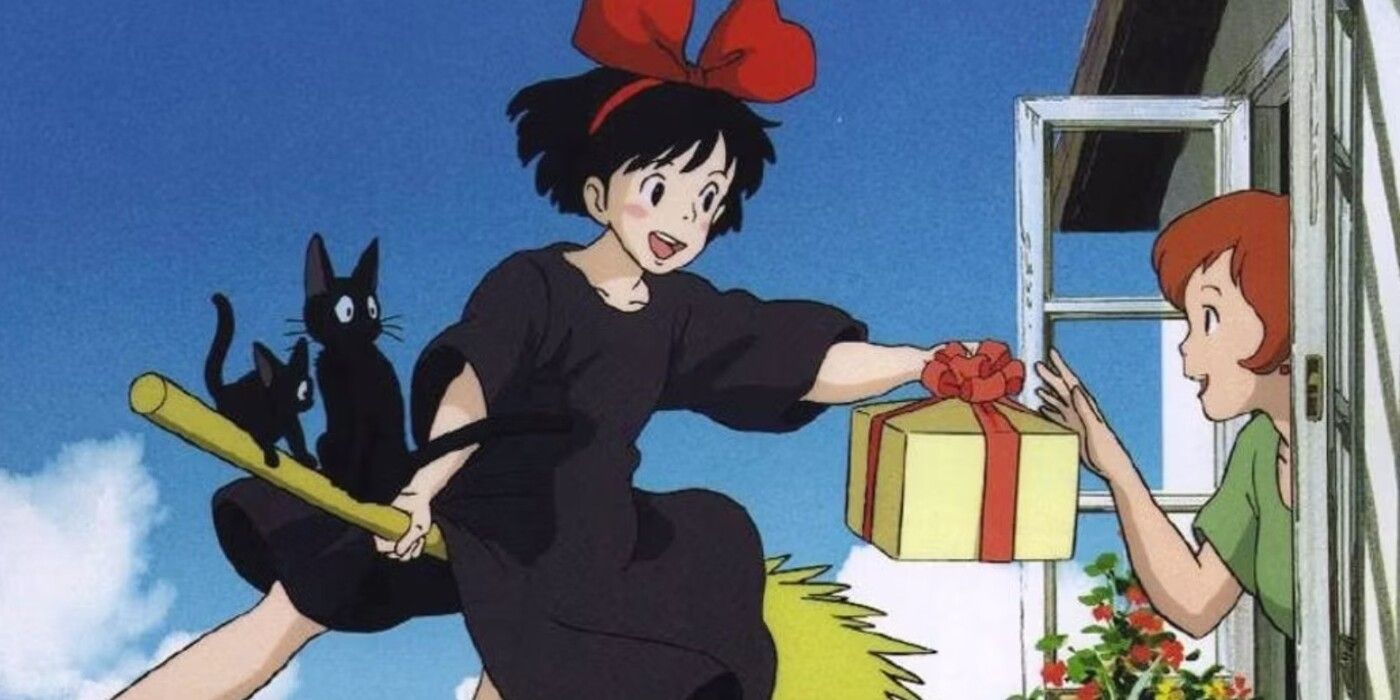
Kiki’s Delivery Service is one of Studio Ghibli’s most well-known and beloved movies. The movie follows Kiki, a young witch. As she is coming of age, Kiki is tasked with spending a year living on her own in a faraway town to prove that she has what it takes to be a fully-fledged adult witch. After moving to the coastal town of Koriko, Kiki sets up a broomstick courier service but soon finds that living on her own and running her own business isn’t as fun as it first seems.
Kiki’s Delivery Service is based on the novel written by Eiko Kadono and illustrated by Akiko Hayashi. The book was published in 1985 and has since spawned eight sequels, with the most recent book, Witch’s Express Home Delivery Special Edition 3: Keke and the Half Witch, releasing in early 2022.
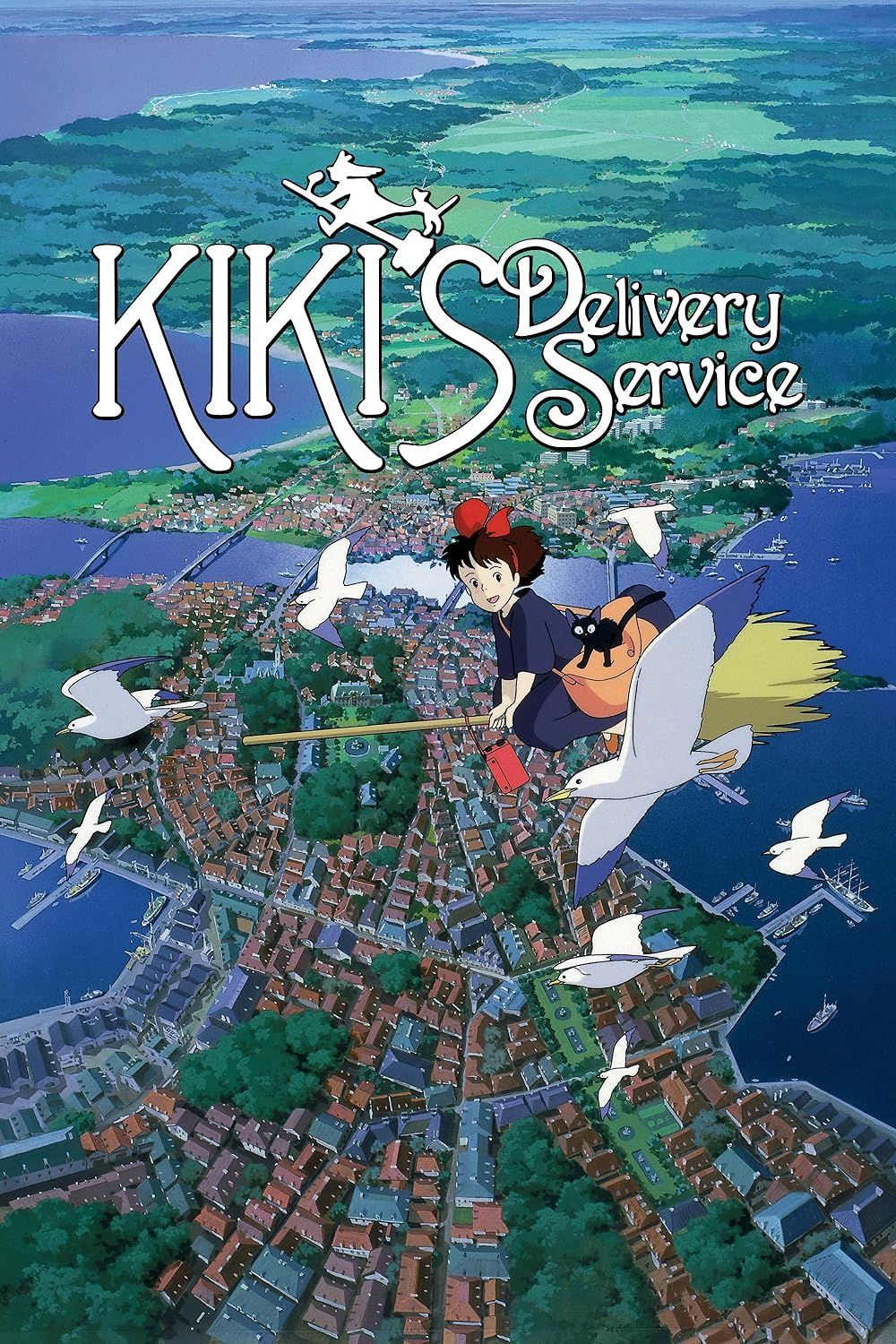
Kiki’s Delivery Service
A young witch, on her mandatory year of independent life, finds fitting into a new community difficult while she supports herself by running an air courier service.
- Release Date
- December 20, 1990
- Studio
- Studio Ghibli
- Cast
- Kirsten Dunst , Phil Hartman , Janeane Garofalo , Matthew Lawrence
- Runtime
- 1 Hour 43 Minutes
- Production Company
- Kiki’s Delivery Service Production Committee, Nibariki, Nippon Television Network (NTV)
Only Yesterday Was First A Manga

Directed by Isao Takahata and arriving on screens in 1991, Only Yesterday follows Taeko Okajima, a city girl enduring a crisis of confidence. Hoping to try and clear her head, she decides to visit her rural family and help them with the harvest. But once there, Taeko starts to question what she wants from life as she recalls memories from her childhood.
Only Yesterday is based on the manga Omoide Poro Poro, written by Hotaru Okamoto and illustrated by Yuko Tone. However, the manga is very different from the movie, as it only features the childhood segments and lacks the overarching older Taeko plot, hence why many overlook Only Yesterday’s status as an adaptation.

Only Yesterday
A twenty-seven-year-old office worker travels to the countryside while reminiscing about her childhood in Tokyo.
- Director
- Isao Takahata
- Release Date
- February 26, 2016
- Cast
- Miki Imai , Toshirô Yanagiba
- Writers
- David Freedman
- Runtime
- 1 Hour 59 Minutes
- Production Company
- Nippon Television Network (NTV), Polyphony Digital Animation, Studio Ghibli
Porco Rosso Was Miyazaki Adapting Himself
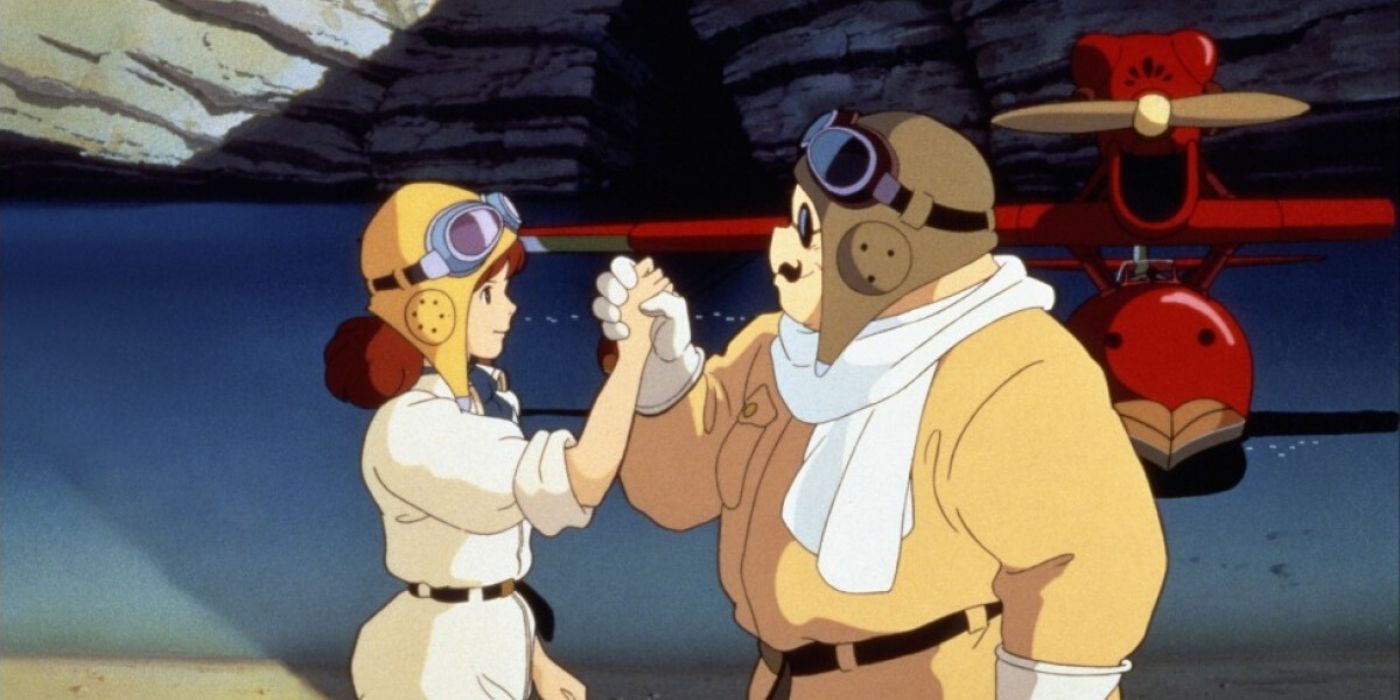

10 Life Lessons Studio Ghibli Movies Teach Audiences
Studio Ghibli’s wide library of films has countless lessons for audiences to absorb, but some Ghibli films stand out as having the best wisdom.
Arriving on screens in 1992, Porco Rosso is one of the most iconic Studio Ghibli movies. The film follows Marco Pagot, a World War 1 fighter ace transformed into a pig by a curse. Taking the name Porco Rosso, Marco becomes a sky pirate hunter. When a cocky American shoots him down, he sets out to improve his plane so that he can recapture his honor.
Porco Rosso is a rare example of Hayao Miyazaki adapting something he created, as the movie is based on Hikoutei Jidai, a manga Miyazaki wrote and illustrated. Often translated as The Age of the Flying Boat, this manga was serialized in Model Graphix magazine in 1989 as part of the Hayao Miyazaki’s Daydream Data Notes series.

Porco Rosso
In 1930s Italy, a veteran World War I pilot is cursed to look like an anthropomorphic pig.
- Release Date
- December 16, 1994
- Cast
- Bunshi Katsura Vi , Shûichirô Moriyama , Tokiko Katô , Akemi Okamura , Akio Otsuka , Michael Keaton , Cary Elwes , Kimberly Williams-Paisley
- Runtime
- 94 minutes
- Where to watch
- Max
- Studio(s)
- Studio Ghibli
- Distributor(s)
- Toho
Ocean Waves Was Based On A Serial Novel

A made-for-TV movie, Ocean Waves was released in 1993 and directed by Tomomi Mochizuki. The series follows high school student Taku Morisaki. One day, his friend, Yutaka Matsuno, introduces him to Rikako Muto, a girl who recently transferred to their school and is having trouble making friends.
However, as Taku spends more time with Rikako, he becomes increasingly tangled in the girl’s life. This turns Taku’s existence upside down because Rikako’s problems are complicated, harrowing, and wide-reaching. Ocean Waves was based on I Can Hear the Sea, the serial novel series created by Saeko Himuro and released between 1990 and 1992 in the pages of Animage magazine.
Pom Poko Takes Ideas From A Poem
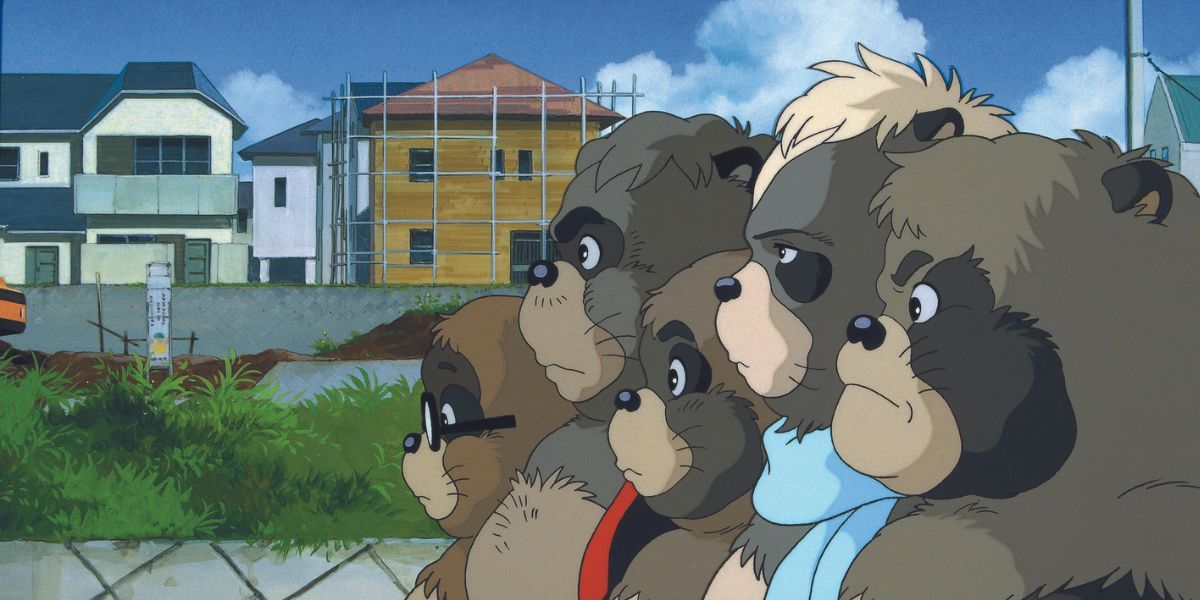
One of Studio Ghibli’s most overlooked works, 1994’s Pom Poko was directed by Isao Takahata and distributed by Toho. The film follows a clan of Tanuki living in a forest just outside of Tokyo. When Tokyo starts to expand, this forest is targeted by land developers who want to turn it into housing.
Trying to protect their home, the Tanuki use all of their magical powers, including their shape-shifting abilities, to try and scare away the land developers — but they soon realize that keeping their forest won’t be easy. The title of the movie comes from Ujō Noguchi’s 1919 poem, where “Pom Poko” was onomatopoeia for the sound of the Tanukis drumming on their stomachs. However, aside from this and some general themes, the poem has little in common with the film.

Pom Poko
This animated film from Studio Ghibli centers on a group of tanuki (Japanese raccoon dogs) in suburban Tokyo, who use their shape-shifting abilities to fight against urban development that threatens their forest home. Through humor and fantasy, the story reflects on environmental issues and the impact of modernization on traditional habitats.
- Director
- Isao Takahata
- Release Date
- July 16, 1994
- Cast
- Shinchou Kokontei , Makoto Nonomura , Yuriko Ishida , Norihei Miki , Nijiko Kiyokawa , Shigeru Izumiya , Gannosuke Ashiya , Takehiro Murata
- Writers
- Isao Takahata
- Runtime
- 119 Minutes
- Studio(s)
- Studio Ghibli
- Distributor(s)
- Toho
Whisper of the Heart Adapts A Manga
Whisper of the Heart follows Shizuku Tsukishima, a young girl who loves to write. While looking through her library books, she finds that they had all been previously checked out by Seiji Amasawa. Keen to find the person who shares her taste, Shizuku vows to find this person. One day, after following a cat, Shizuku finds herself at an antique store. She soon learns that the young boy who works there is the Seiji Amasawa she’s been looking for.
Shizuku and Seiji quickly bond over their dreams, kicking off an adventure that will transform their lives while forcing them to consider what they want from life and love. The 1995 movie is based on the manga created by Aoi Hiiragi. The series was serialized in shojo magazine Ribon in 1989.

Whisper of the Heart (1996)
A love story between a girl who loves reading books, and a boy who has previously checked out all of the library books she chooses.
- Release Date
- December 13, 1996
- Runtime
- 1 Hour 51 Minutes
- Characters By
- Yoko Honna, Issei Takahashi, Takashi Tachibana
- Production Company
- Tokuma Shoten, Nippon Television Network (NTV), Hakuhodo
My Neighbors the Yamadas Was A Popular 4-Koma

Studio Ghibli’s Totoro and Kiki 360-Degree ‘Boxes’ Can Be Used for Gardening or Stationery
Studio Ghibli introduces adorable “diorama” boxes featuring Totoro and Jiji — the perfect decor for anything from a backyard garden to a home office.
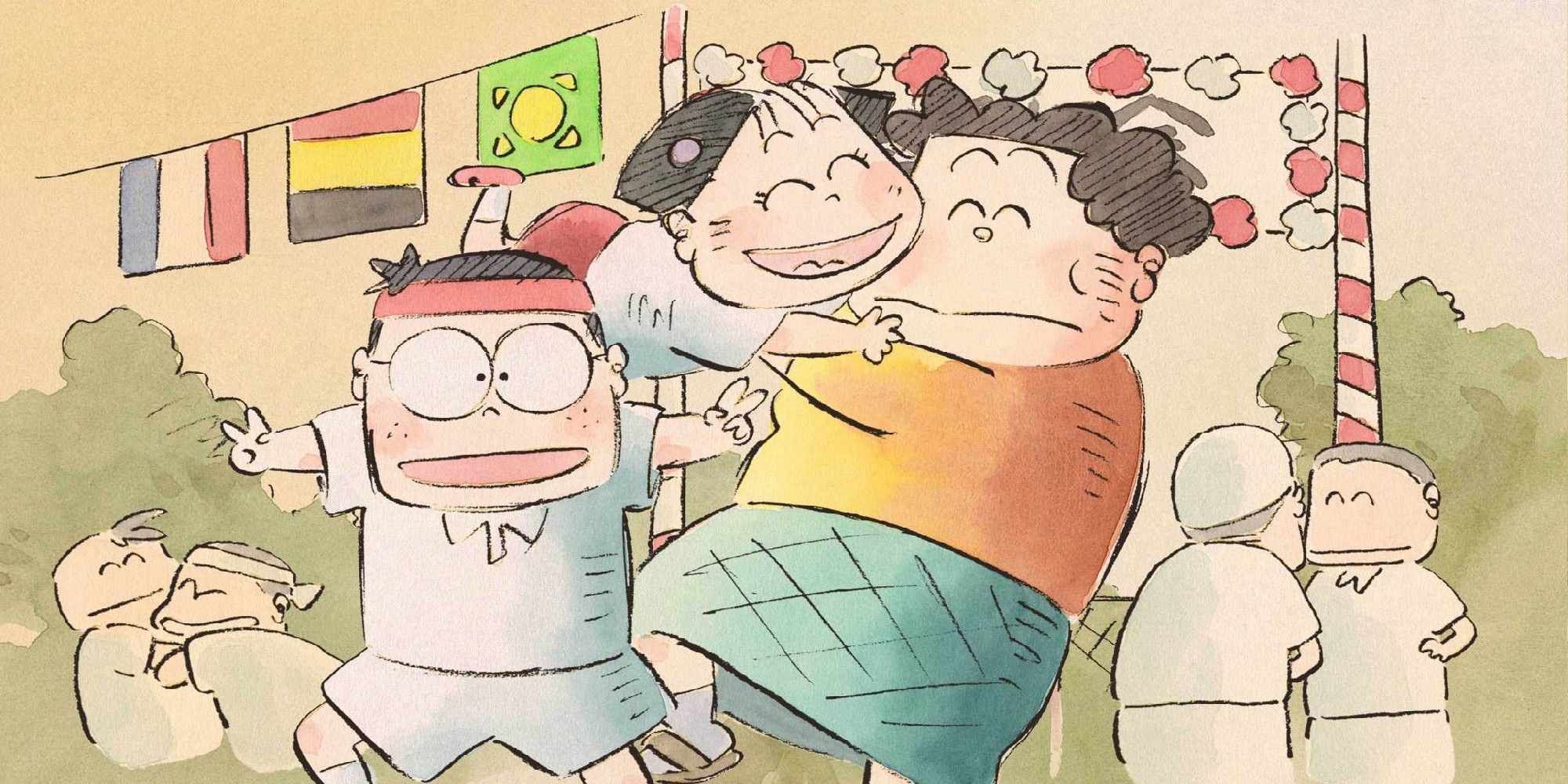
1999’s My Neighbors the Yamadas follows the titular Yamada family: father Takashi, mother Matsuko, oldest son Noboru, younger daughter Nonoko, and the family dog Pochi. Told as a series of vignettes, the film follows the Yamadas as they go about their lives, enduring many comedic ups and downs as they do.
My Neighbors the Yamadas is based on the popular 4-koma gag manga written by Hisaichi Ishii. When this manga launched in 1991, it was called My Neighbors the Yamadas. But in 1997, the series was renamed Nono-chan to reflect the manga’s increasing focus on the youngest daughter. Outside this movie, the franchise has also received an anime adaptation and the comic has been republished several times.
The Cat Returns Is Based On A Sequel Manga
Directed by Hiroyuki Morita, The Cat Returns features one of the side characters from the previously released Whisper of the Heart. It follows Haru Yoshioka, a shy high school student who saves a cat about to be hit by a truck, only to discover that the cat is Lune, the Prince of the Cat Kingdom.
Lune asks for Haru’s hand in marriage, and due to a communication issue, Haru accepts the offer, leading to her being whisked off to the Cat Kingdom. Once there, Haru learns she’ll fully transform into a cat if she doesn’t quickly find her way home. Like Whisper of the Heart, The Cat Returns is based on a manga created by Aoi Hiiragi. This manga, called Baron: The Cat Returns, was published in 2002.

The Cat Returns
After helping a cat, a seventeen-year-old girl finds herself involuntarily engaged to a cat Prince in a magical world where her only hope of freedom lies with a dapper cat statuette come to life.
- Director
- Hiroyuki Morita
- Release Date
- July 20, 2002
- Cast
- Chizuru Ikewaki , Aki Maeda , Takayuki Yamada , Hitomi Sato , Yoshihiko Hakamada
- Writers
- Aoi Hiiragi , Reiko Yoshida , Cindy Davis
- Runtime
- 75 Minutes
- Producer
- Ned Lott, Toshio Suzuki, Nozomu Takahashi
- Production Company
- Hakuhodo, Mitsubishi, Nippon Television Network (NTV), Studio Ghibli, Toho Company, Tokuma Shoten, Walt Disney Productions
Howl’s Moving Castle Is Based On A Legendary Kids’ Book
Howl’s Moving Castle is one of the most popular and instantly recognizable Studio Ghibli movies. Released in 2004 and directed by the legendary Hayao Miyazaki, the film follows a young girl called Sophie. Sophie’s quiet life is turned upside down when she meets a dashing wizard named Howl while running errands. Alas, this joy is short-lived; after returning home, she finds that the Witch of the Waste is there waiting for her. This witch curses Sophie, turning her into a 90-year-old woman. Distraught by this transformation, Sophie embarks on a quest to undo the curse. After finding Howl’s castle, Sophie meets Calcifer, a fire demon who promises to break Sophie’s curse if she can break the bond between Howl and Calcifer, something Sophie instantly agrees to — but this is much easier said than done, especially as a massive war is devastating the region.
Howl’s Moving Castle is based on Diana Wynne Jones’ 1986 novel of the same name. The movie deviates from the book in several massive ways. Most notably, many characters from the book were cut from the film version, and several subplots were removed. Also, in the novel, the war isn’t focused on. However, Miyazaki heavily featured the war element in the film, lacing the story with an unmissable anti-war message.

Howl’s Moving Castle
When an unconfident young woman is cursed with an old body by a spiteful witch, her only chance of breaking the spell lies with a self-indulgent yet insecure young wizard and his companions in his legged, walking castle.
- Release Date
- June 17, 2005
- Studio
- Studio Ghibli
- Cast
- Takuya Kimura , Tatsuya Gashûin , Chieko Baisho
- Runtime
- 1 Hour 59 Minutes
- Production Company
- Buena Vista Home Entertainment, DENTSU Music And Entertainment, Mitsubishi.
Tales from Earthsea Has Two Big Influences

Directed by Gorō Miyazaki, Tales from Earthsea launched in 2006. The film follows Sparrowhawk, a powerful archmage trying to learn why a series of calamities are striking the kingdom of Earthsea. While on this quest, he meets Prince Arren, the fugitive heir to the throne of Enlad, and the pair form an uneasy bond. However, when the evil Lord Cob sets his sights on the pair, they are forced to fight for their lives and the world’s future.
Interestingly, Tales from Earthsea is based on two things. It is partially based on the first four books of Ursula K. Le Guin’s legendary Earthsea series of fantasy novels: A Wizard of Earthsea, The Tombs of Atuan, The Farthest Shore, and Tehanu. Plus, the film takes its name from a 2001 collection of short stories and essays by Le Guin. The film also takes heavy inspiration from Hayao Miyazaki’s 1983 manga Shuna’s Journey.
Tales from Earthsea
The Secret World of Arrietty Has An Obvious Influence In Japan

10 Studio Ghibli Movies That Deserve To Be Rereleased in Theaters
Studio Ghibli is a prolific studio with hits like Spirited Away, but classics such as Porco Rosso deserve to shine in a theatrical rerelease.
Released in 2010 and directed by Hiromasa Yonebayashi, The Secret World of Arrietty follows Shō, a young but sickly boy spending the summer at his great-aunt’s house. One day, while exploring, Shō spots a tiny girl. This girl introduces herself as Arrietty, and she explains that she and her family live under the floorboards. To survive, Arrietty and her family sneak into the human world and borrow the things they need, everything from sugar to tissue paper.
Shō and Arrietty quickly strike up a friendship. However, this causes problems when Arrietty’s parents discover this friendship, as they believe humans should never know of their existence. The Secret World of Arrietty is based on Mary Norton’s beloved 1952 children’s novel The Borrowers — a fact that is more obvious in Japan, where the film’s full title is Arrietty the Borrower.
From Up on Poppy Hill Adapts A Manga

Arriving on screens in 2011 and directed by Gorō Miyazaki, From Up on Poppy Hill follows Umi Matsuzaki, a 16-year-old girl who lives in an old boarding house that overlooks the Port of Yokohama. As her mother is studying in America, Umi has to maintain the house alone while looking after her grandmother and younger siblings.
Umi’s life gets even more complex when it is announced that the Latin Quarter, a beloved local clubhouse, is threatened with demolition, forcing her and other local high school students to band together to save it. From Up on Poppy Hill is based on the manga Coquelicot-zaka kara (often translated as From Coquelicot Hill), which was written by Tetsurō Sayama and illustrated by Chizuru Takahashi and published in Nakayoshi magazine in 1979.
From Up On Poppy Hill
The Wind Rises Pulls From A Biography And Miyazaki’s Previous Works
2013’s The Wind Rises is a semi-fictionalized biography of Jiro Horikoshi, the engineer who designed many Japanese fighter planes, including the Mitsubishi A6M Zero. This movie follows Jiro as he moves to Tokyo to study aeronautical engineering, only to find himself entangled in the confusion and social unrest that defined the last years of the Second World War.
The Wind Rises is based on Hayao Miyazaki’s manga of the same name. This manga was first published in Model Graphix magazine in 2009. It was part of a series that acted as a pseudo-sequel to the magazine’s previously published Hayao Miyazaki’s Daydream Data Notes section. The Wind Rises also draws heavy inspiration from Jiro Horikoshi’s autobiography Eagles of Mitsubishi: The Story of the Zero Fighter, meaning that The Wind Rises can be seen as a loose adaptation of both works.

The Wind Rises
Original title: Kaze tachinu
A look at the life of Jiro Horikoshi, the man who designed Japanese fighter planes during World War II.
- Release Date
- February 21, 2014
- Cast
- Hideaki Anno , Hidetoshi Nishijima
- Runtime
- 2 hours 6 minutes
- Production Company
- Studio Ghibli, Nippon Television Network (NTV), Dentsu
The Tale of the Princess Kaguya Is A Traditional Tale

Released in 2013 and directed by Isao Takahata, The Tale of the Princess Kaguya tells the story of Okina, a man who works as a bamboo cutter. One day, while chopping plants, he finds a baby in a bamboo shoot. He takes the baby back to his wife, and they decide to raise the child as their own because Okina believes the child is a divine blessing from heaven.
But as the child grows, various problems arise for the family, which leads to the baby’s true origin being revealed. This film is based on the Heian-era folk tale The Tale of the Bamboo Cutter. While the tale’s author is unknown, the story has become a beloved folktale in Japan, one that has been adapted into many different forms and has been referenced in a multitude of other works.

The Tale of Princess Kaguya
Found inside a shining stalk of bamboo by an old bamboo cutter and his wife, a tiny girl grows rapidly into an exquisite young lady. The mysterious young princess enthralls all who encounter her, but ultimately she must confront her fate, the punishment for her crime.
- Director
- Isao Takahata
- Release Date
- November 23, 2013
- Writers
- Isao Takahata , Riko Sakaguchi
- Runtime
- 2 Hours 17 Minutes
- Production Company
- Studio Ghibli, Dentsu, Hakuhodo DY Media Partners
When Marnie Was There Swaps England For Japan
10 Highest Grossing Studio Ghibli Movies, Ranked
Studio Ghibli is responsible for some of the most beloved anime films of all time, but many of these movies have also made waves at the box office.
Directed by Hiromasa Yonebayashi, When Marnie Was There tells the story of Anna Sasaki, an asthmatic girl who is shy and isolated. A doctor suggests that Anna spend some time in the country, believing that the slower pace of life and the cleaner air will help her condition. Thus, it is decided that Anna will spend the summer with her aunt and uncle in a small seaside town.
While exploring this town, Anna discovers the Marsh House, a seemingly abandoned mansion inhabited by Marnie, a strange young girl. Marnie and Anna quickly become friends, but Anna soon learns that there may be more to this girl than meets the eye. When Marnie Was There is based on the novel of the same name written by Joan G. Robinson, with the film swapping the book’s English setting for a Japanese one.

When Marnie Was There
Anna, a shy 12-year-old girl, is sent to spend time with her aunt and uncle who live in the countryside, where she meets Marnie. The two become best friends. But Anna gradually discovers that Marnie is not quite who she appears to be.
- Director
- Hiromasa Yonebayashi
- Release Date
- August 7, 2015
- Cast
- Nanako Matsushima , Yûko Kaida , Toshie Negishi , Susumu Terajima , Kasumi Arimura , Sara Takatsuki , Hailee Steinfeld , Kiernan Shipka , Grey Griffin
- Writers
- Keiko Niwa , Masashi Andō
- Runtime
- 103 minutes
- Where to watch
- Max
- Studio(s)
- Studio Ghibli
- Distributor(s)
- Toho
Earwig and the Witch Is Based On A Book

2020’s Earwig and the Witch was directed by Gorō Miyazaki. The movie follows Earwig, an orphan who lives in St. Morwald’s Home for Children. Earwig’s life totally changes when Bella Yaga and Mandrake arrive at the home and adopt Earwig, despite Earwig wanting to stay at St. Morwald’s. Even worse, Bella Yaga admits that she has no intention of being Earwig’s mother. She informs Earwig that she is a witch and has only adopted the child as she needs someone to do her housework.
Earwig, resenting this situation, quickly starts plotting a way to escape this situation but learns several surprising secrets as she does. Earwig and the Witch shares a fascinating link with Howl’s Moving Castle, as both are based on novels by Diana Wynne Jones. Diana Wynne Jones’ Earwig and the Witch novel, which featured illustrations by Paul O. Zelinsky, first arrived on shelves in 2011.
The Boy and the Heron Shares Its Inspiration In Japan
Hayao Miyazaki’s latest film, The Boy and the Heron, has received praise from fans and critics alike. The film follows Mahito Maki, a young boy dealing with the horrors of the Second World War. His life only gets worse when his mother dies in a tragic hospital fire, an event that shakes Mahito to his core.
Eventually, Mahito’s father marries Mahito’s mother’s sister, and they move to the country. However, while living in the country, Mahito meets a mysterious heron who tells him that his mother isn’t truly dead and that Mahito can save her. Despite telling an original story, The Boy and the Heron draws heavy inspiration from Genzaburo Yoshino’s novel How Do You Live? from 1937. This inspiration is clearer in Japan, where the film and the book share a title.
-
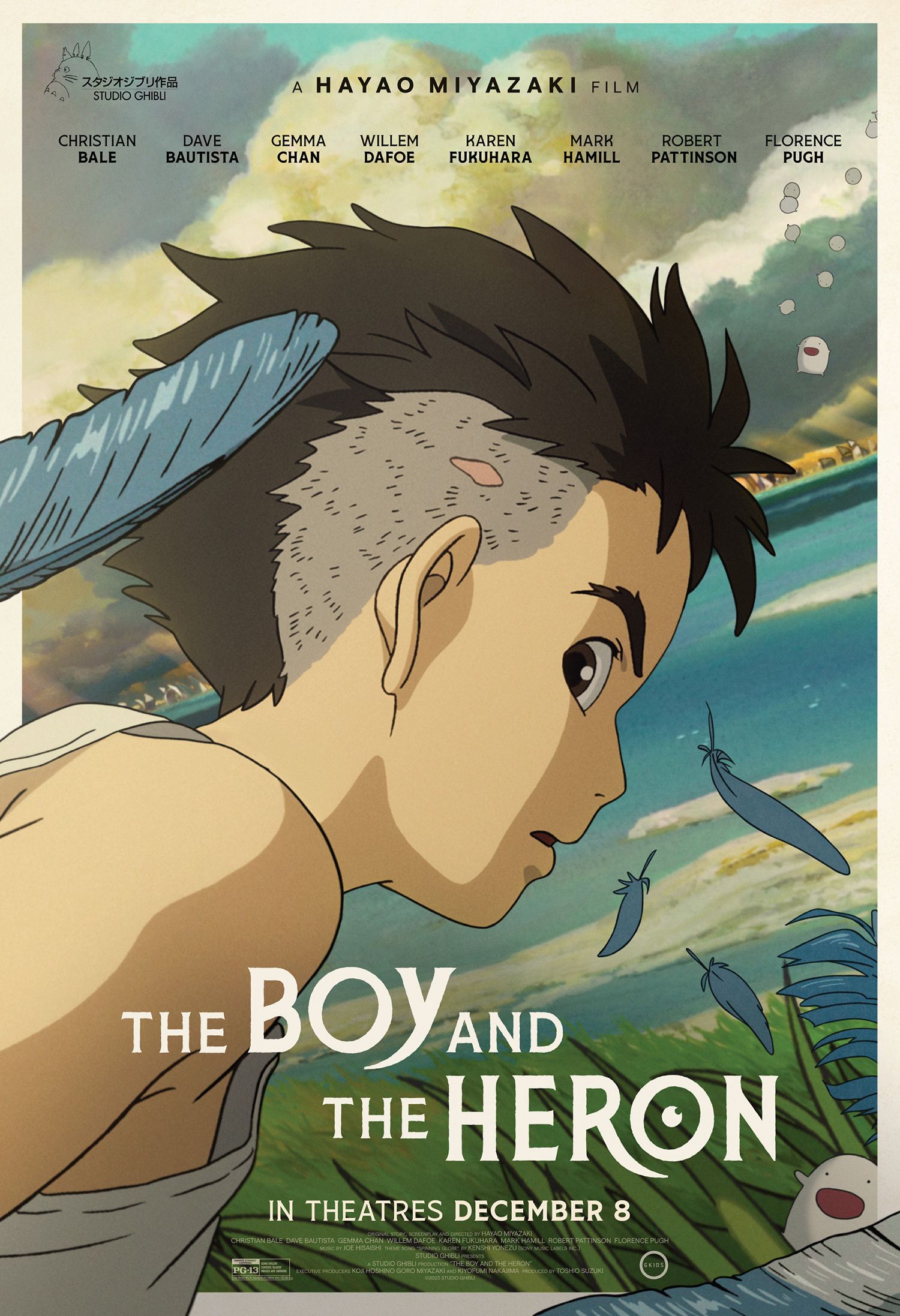
The Boy and the Heron
A young boy named Mahito yearning for his mother ventures into a world shared by the living and the dead. There, death comes to an end, and life finds a new beginning. A semi-autobiographical fantasy from the mind of Hayao Miyazaki.
-
Studio Ghibli
Studio Ghibli, Inc. is a Japanese animation studio based in Koganei, Tokyo. It has a strong presence in the animation industry and has expanded its portfolio to include various media formats, such as short subjects, television commercials, and two television films. Their work has been well-received by audiences and recognized with numerous awards. Their mascot and most recognizable symbol, the character Totoro from the 1988 film My Neighbor Totoro, is a giant spirit inspired by tanukis and cats .
View original article here Source